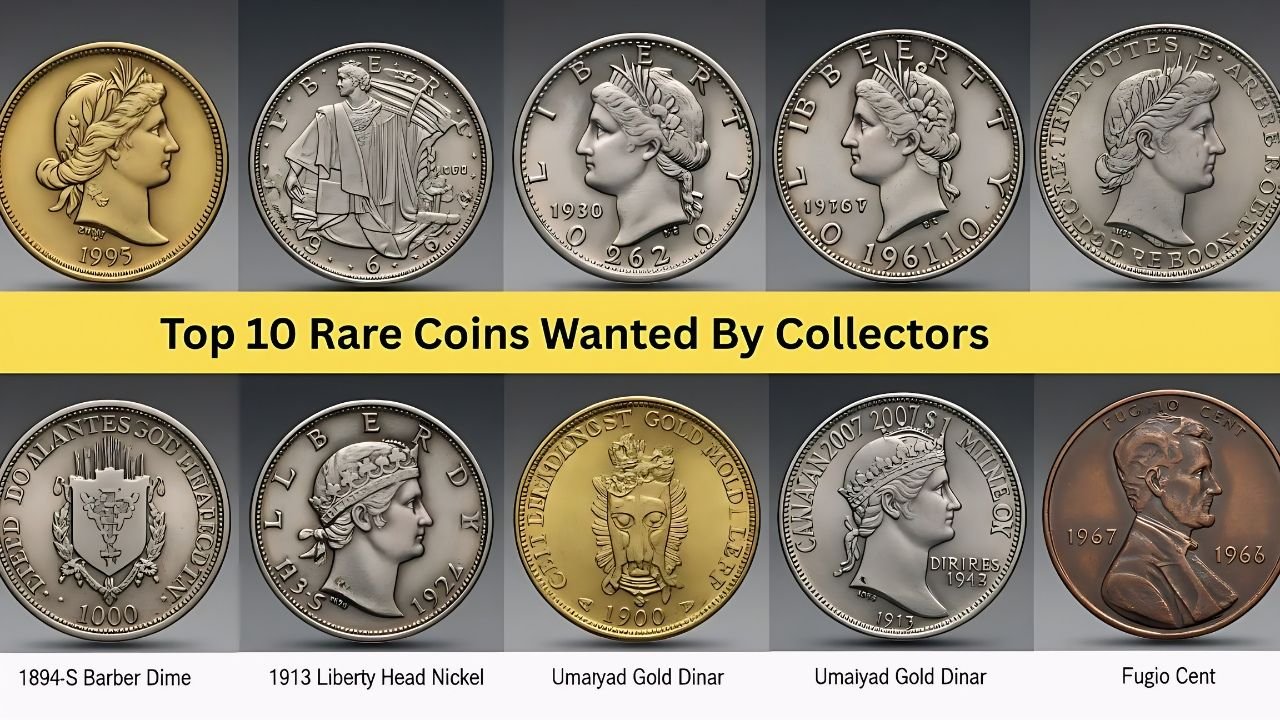
Coin collecting isn’t just a hobby — it’s a journey through history, craftsmanship, and value. Over the years, a handful of rare coins have become the ultimate treasure for collectors worldwide. Some are worth thousands, others millions, but all share one thing: they represent the pinnacle of numismatic history.
Whether you’re a lifelong collector or a beginner hoping to discover a hidden gem in your pocket change, this guide explores 10 rare coins that every collector dreams of owning — and what makes them so valuable.
1. 1933 Saint-Gaudens Double Eagle ($20 Gold Coin)
-
Metal: Gold
-
Mintage: 445,500 (but almost all melted down)
-
Estimated Value: $7 million to $20 million
Considered the holy grail of U.S. coins, this $20 gold piece was never officially circulated after the U.S. left the gold standard in 1933. Only a few escaped destruction, and one sold for over $18.9 million in 2021.
IRS Confirms $1,390 Direct Deposit Relief for November 2025 – Complete Guide for Eligible Americans
2. 1913 Liberty Head Nickel
-
Metal: Nickel-Copper
-
Mintage: 5 known
-
Estimated Value: $4 million to $5 million
This coin shouldn’t exist — the U.S. Mint had switched to the Buffalo nickel in 1913. But five Liberty Head nickels were mysteriously struck and later surfaced, turning them into some of the most coveted coins in American history.
3. 1794 Flowing Hair Silver Dollar
-
Metal: Silver
-
Mintage: 1,758
-
Estimated Value: Up to $10 million
Believed to be the first silver dollar ever struck by the U.S. Mint, this coin symbolizes the birth of American currency. Its design features Lady Liberty with flowing hair — a powerful image of the new nation.
4. 1943 Copper Lincoln Penny
-
Metal: Copper (should have been steel)
-
Mintage: About 40 known
-
Estimated Value: $100,000 to $1.7 million
In 1943, pennies were made of steel to conserve copper for World War II. A few copper blanks were accidentally used, creating one of the most famous mint errors in history. If you find a 1943 penny that sticks to a magnet — it’s steel. If it doesn’t, you might be holding a fortune.
5. 1804 Draped Bust Silver Dollar
-
Metal: Silver
-
Mintage: Officially none in 1804, but 15 known proofs made later
-
Estimated Value: $2 million to $7 million
Known as the “King of American Coins,” this dollar wasn’t struck in 1804 but later in the 1830s for diplomatic gifts. Its rarity and mystique make it one of the most desired coins in the world.
6. 1870-S Seated Liberty Dollar
-
Metal: Silver
-
Mintage: Only 9 known
-
Estimated Value: $1 million to $2 million
The “S” mint mark stands for San Francisco, but curiously, this coin wasn’t listed in official records. Its mysterious creation and limited count make it one of the most collectible coins of the 19th century.
7. 1955 Double Die Lincoln Cent
-
Metal: Copper
-
Mintage: About 20,000 released
-
Estimated Value: $1,000 to $15,000
Collectors love this famous error coin — the date and lettering on the obverse are clearly doubled. It’s one of the most sought-after modern-era U.S. coins, often hiding in circulation for years.
8. 1916-D Mercury Dime
-
Metal: Silver
-
Mintage: 264,000
-
Estimated Value: $1,000 to $20,000+
The first year of the Mercury dime series, but with a very low Denver mintage. High-grade versions are incredibly rare and a top target for silver coin enthusiasts.
9. 1893-S Morgan Silver Dollar
-
Metal: Silver
-
Mintage: 100,000
-
Estimated Value: $5,000 to $500,000+
The Morgan Dollar is one of America’s most beloved coins, and the 1893-S issue is its crown jewel. Most were heavily circulated, leaving very few in pristine condition.
10. 2000-P Sacagawea Dollar “Cheerios” Variety
-
Metal: Golden Manganese Brass
-
Mintage: 5,500 distributed in cereal boxes
-
Estimated Value: $5,000 to $25,000
In 2000, the U.S. Mint partnered with General Mills to promote the new Sacagawea dollar by including special coins in Cheerios boxes. A small number had prototype tail feathers, making them rare collector’s items today.
$4983 Stimulus Direct Deposit 2025: Eligibility, Payout Timeline, and What It Means for Americans
Why These Coins Are So Valuable
Rarity isn’t the only factor that drives prices. Value is influenced by:
-
Historical significance – Connection to major events or first-year issues.
-
Mintage numbers – Fewer coins mean higher demand.
-
Condition – Mint-state coins command enormous premiums.
-
Errors or variations – Mistakes often create unique, collectible pieces.
-
Public interest – The story behind a coin can add incredible value.
Tips for Collectors
-
Check your change: Rare coins have been found in everyday transactions.
-
Don’t clean your coins: Cleaning can destroy value.
-
Get professional grading: Use PCGS or NGC for authentication.

-
Store properly: Use holders or capsules to prevent oxidation.
-
Stay informed: Market trends change — monitor auction results regularly.
Final Thoughts
These 10 coins represent the dream list of collectors around the world — a blend of history, artistry, and mystery. Whether worth a few thousand or several million dollars, each of these coins tells a story of America’s evolution, its minting craftsmanship, and the enduring passion for numismatics.
Even if you never own one, understanding their legacy reminds us why coin collecting remains one of the most fascinating and rewarding hobbies in the world.
FAQ – Rare Coins Every Collector Dreams Of
Q1: How can I tell if a coin is rare or valuable?
A: Look for low mintage years, minting errors, or unique markings. Check the coin’s date, mint mark, and condition — then compare with a current coin value guide or have it appraised by a professional.
Q2: What’s the best way to verify authenticity?
A: Use a professional grading service like PCGS (Professional Coin Grading Service) or NGC (Numismatic Guaranty Company). They confirm authenticity, grade your coin, and provide certification for collectors and buyers.
Q3: Can I find rare coins in regular circulation?
A: Yes, though it’s uncommon. Coins like the 1955 Double Die Lincoln Cent or 2000-P Cheerios Sacagawea Dollar have appeared in circulation or collections passed down through families.
Q4: Does cleaning a coin increase its value?
A: No — cleaning a coin can decrease its value dramatically. Collectors prefer coins in their natural, unaltered state.
Q5: Where’s the best place to sell rare coins?
A: Trusted coin dealers, major auction houses, or certified numismatic marketplaces. Always verify buyer credibility before making a sale.
Q6: What makes a coin “collectible”?
A: Coins become collectible due to age, rarity, minting errors, limited production, or historical importance — factors that give them uniqueness and long-term value.
