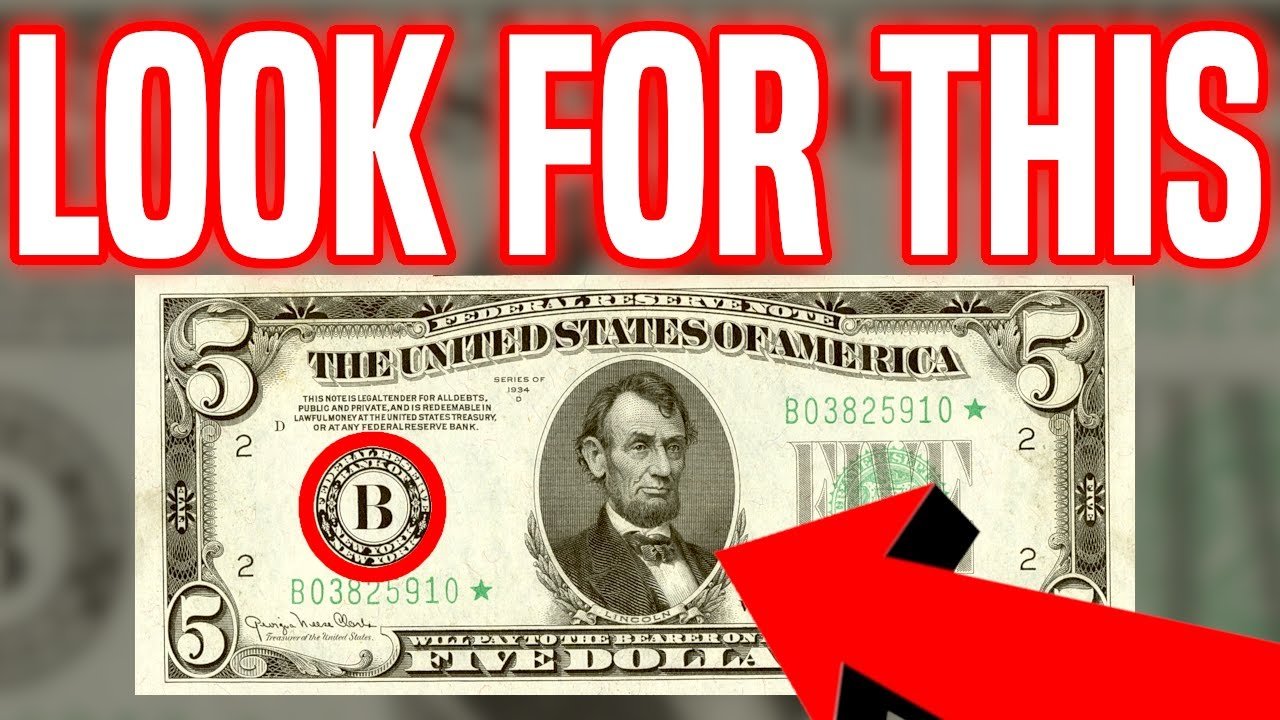
Most of us spend our paper money without a second thought — but sometimes, a small printing mistake can turn an ordinary bill into a collector’s treasure. One such example is the 1995 $5 bill with an upside-down seal, a rare printing error that can be worth hundreds or even thousands of dollars to collectors. If you have older cash tucked away, now might be the time to take a closer look. Here’s how to identify this rare error and what makes it so valuable.
What Makes the 1995 $5 Bill Special
The 1995 series $5 bill features a portrait of Abraham Lincoln on the front and the Lincoln Memorial on the back — a design most Americans recognize instantly. However, a small number of these notes were printed with a major alignment error:
- The U.S. Treasury seal on the right side of the bill was printed upside down.
This type of mistake, known as a “seal inversion error,” occurred during the overprinting process at the Bureau of Engraving and Printing (BEP).
Because quality checks usually catch such misprints, only a limited number escaped into circulation, making them incredibly rare.
10 Rare Coins That Every Collector’s Dream – The Ultimate Guide
How to Identify a 1995 $5 Bill With an Upside-Down Seal
To determine whether your $5 bill is a rare error note, inspect it carefully using these steps:
-
Check the Series Year:
- Look in the lower right corner near Lincoln’s portrait. It should say Series 1995.
-
Examine the Treasury Seal:
- The green Treasury seal to the right of Lincoln’s portrait should be upright.
- If it appears inverted (the top is pointing downward), you may have an error note.
Look at the Serial Numbers:
- Serial numbers are printed at the same time as the Treasury seal.
- On a genuine error note, the seal is inverted, but the serial numbers remain correctly oriented.
-
Verify Authenticity:
- The note should still have normal security features for 1995 bills, including the watermark, paper texture, and embedded security thread.
- Avoid counterfeit or altered bills by consulting a currency expert before assuming high value.
How Much Is It Worth?
The value of a 1995 $5 upside-down seal note depends on several factors:
| Condition | Estimated Value Range |
|---|---|
| Circulated (worn) | $100 – $300 |
| Crisp Uncirculated | $500 – $1,000+ |
| Certified High-Grade | $1,500 – $3,000+ |
Collectors prize these notes because they combine historical significance and visual rarity. Bills with perfectly centered printing, sharp edges, and no damage command the highest prices at auction.
Why Errors Like This Occur
Modern U.S. paper money goes through several high-speed printing stages. During the overprinting stage, the Treasury seal and serial numbers are added to sheets of printed notes.
If a sheet is misfed or flipped between runs, one or more notes may receive an inverted seal while the rest of the design remains correct.
Once cut and circulated, these bills become prized examples of genuine minting mistakes.
How to Sell or Appraise Your Error Bill
If you think you’ve found a 1995 $5 bill with an upside-down seal:
-
Do not fold or damage it further.
-
Place it in a protective currency sleeve to prevent wear.
-
Have it authenticated by a currency grading service such as:
- PCGS Currency
- PMG (Paper Money Guaranty)
Professional certification increases the note’s resale value and ensures potential buyers know it’s legitimate.
Once graded, you can sell it through reputable currency dealers, numismatic auctions, or collector marketplaces.
Final Thoughts
Most $5 bills are worth exactly $5 — but the 1995 upside-down seal error is a thrilling exception. For collectors, it’s not just about the value, but the story: a rare glimpse into how precision meets imperfection at the U.S. Bureau of Engraving and Printing.
So, before you spend that old $5 bill sitting in your wallet or drawer, take a closer look. If Lincoln’s Treasury seal seems flipped, you might just be holding a small piece of U.S. currency history — and a hidden treasure worth far more than face value.
FAQ – 1995 $5 Bill With Upside-Down Seal
Q1: Is the 1995 $5 bill with an upside-down seal real or a myth?
A: It’s real — but extremely rare. A small number of 1995 $5 bills were printed with an inverted Treasury seal, making them valuable collector’s items.
Q2: How can I tell if my $5 bill is an error note?
A: Check for the Series 1995 marking and inspect the green Treasury seal. If it’s printed upside down while the serial numbers are correct, you may have an authentic error note.

Q3: How much is a 1995 $5 upside-down seal bill worth?
A: Values vary by condition:
- Circulated: $100–$300
- Uncirculated: $500–$1,000+
- Certified high-grade: Up to $3,000 or more
Q4: Could someone fake this error?
A: Yes, altered notes exist. Always have your bill authenticated by a professional grading service like PMG or PCGS before selling or buying.
Q5: Where can I sell a rare $5 bill?
A: Through trusted coin and currency dealers, numismatic auctions, or certified collector marketplaces. Avoid unverified online buyers offering instant payments.
Q6: Should I clean or flatten the bill before selling?
A: No. Cleaning or pressing paper money can lower its value. Keep it in a protective sleeve and handle it minimally to preserve condition.
